How Do I Know If I Have ADHD as an Adult?

Read the full article
Many adults wonder whether ADHD could explain difficulties they've experienced for years: trouble staying focused, constantly putting things off, forgetting appointments, losing things, feeling overwhelmed by everyday tasks, or struggling to finish what they start.
Adult ADHD can be easy to overlook. Some people were never evaluated as children, while others learned to compensate for their symptoms through routines, high effort, or simply pushing themselves harder.
So how do you know if it is ADHD?
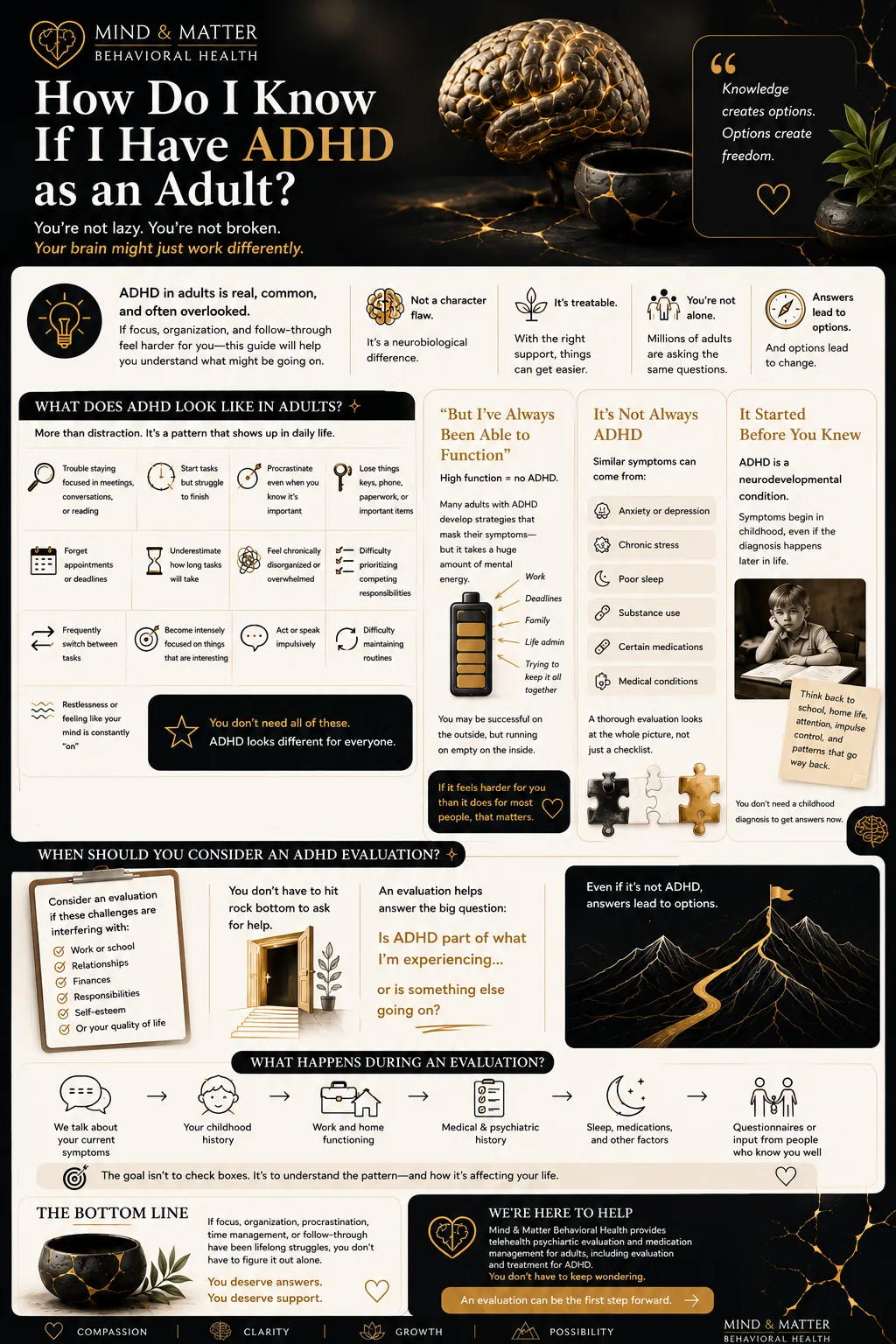
What Does ADHD Look Like in Adults?
ADHD is more than simply being distracted or occasionally procrastinating. Adults with ADHD may experience persistent difficulties with attention, organization, time management, impulse control, or completing tasks.
Common symptoms can include:
- Difficulty staying focused during meetings, conversations, or reading
- Frequently starting tasks but struggling to finish them
- Procrastinating even when you know something is important
- Losing keys, phones, paperwork, or other important items
- Forgetting appointments or deadlines
- Underestimating how long tasks will take
- Feeling chronically disorganized or overwhelmed
- Difficulty prioritizing competing responsibilities
- Frequently switching between tasks
- Becoming intensely focused on activities that are especially interesting
- Restlessness or feeling like your mind is constantly moving
- Acting or speaking impulsively
- Difficulty maintaining routines
Not every adult with ADHD experiences all of these symptoms. ADHD can also look different from person to person.
But I've Always Been Able to Function
One of the biggest misconceptions about adult ADHD is that someone can't have ADHD if they have a successful career, family, or other responsibilities.
Many adults with ADHD develop strategies that let them function at a high level. The problem is often the amount of effort required to maintain that level of functioning.
You may be successful at work but constantly feel overwhelmed behind the scenes. You may meet deadlines, but only because you wait until the last possible moment and work under intense pressure.
You may also find yourself thinking:
"Why does everything seem harder for me than it does for everyone else?"
That experience can be worth exploring.
ADHD Symptoms Can Overlap With Other Conditions
Not every concentration or organizational problem is ADHD.
Difficulty focusing can occur with anxiety, depression, chronic stress, inadequate sleep, substance use, certain medications, and other medical or psychiatric conditions.
That's why an ADHD evaluation should look at the whole picture, including your symptoms, their history, how they affect different areas of your life, and whether another condition could better explain what you're experiencing.
What About Childhood Symptoms?
ADHD is a neurodevelopmental condition, meaning symptoms begin during childhood even if the diagnosis doesn't happen until adulthood.
During an evaluation, a clinician may ask about your childhood behavior, school experiences, attention, organization, impulsivity, and whether similar patterns were present when you were younger.
You don't necessarily need to have a childhood diagnosis to be evaluated for ADHD as an adult.
When Should You Consider an ADHD Evaluation?
Consider talking with a qualified mental health professional if difficulties with attention, organization, procrastination, or impulsivity are consistently interfering with your work, relationships, finances, responsibilities, or quality of life.
You don't need to be completely overwhelmed before seeking help.
An evaluation can help answer an important question:
Is ADHD contributing to the problems I'm experiencing, or is something else going on?
Getting an answer can be useful even if the final diagnosis isn't ADHD.
What Happens During an Adult ADHD Evaluation?
An evaluation typically involves discussing your current symptoms, childhood history, functioning at work and home, medical and psychiatric history, sleep, medications, and other factors that could affect attention and concentration.
Sometimes additional questionnaires or information from people who know you well can be helpful.
The goal is to understand the pattern of symptoms and how they affect your life, rather than to check boxes on a symptom list.
The Bottom Line
If you've spent years wondering why you struggle with focus, organization, procrastination, time management, or follow-through despite knowing what you should be doing, it may be worth exploring whether ADHD is part of the picture.
You don't have to diagnose yourself: a professional evaluation can determine whether ADHD fits your symptoms or another condition is contributing.
Mind and Matter Behavioral Health provides telehealth psychiatric evaluation and medication management for adults, including evaluation and treatment for ADHD. If you are wondering whether ADHD is affecting your life, start with an evaluation.
Learn more
This page is educational and is not a diagnosis or a substitute for care. If you are in crisis, call or text 988.